Don’t Let Pollen Allergies Get the Best of You This Spring

Pollen allergies  — what an awful feeling for anyone who’s had the displeasure of experiencing such a thing. The running nose, the watery eyes and overall hit-by-a-truck feeling are anything but pleasant. And yet, how are you supposed to enjoy the beginnings of spring if the first thing you do when you step outside is sneeze?

Airborne pollens are deposited close to the tree from which it was released. You are more likely to have a reaction to the pollen if the tree is in your yard, as opposed to trees few houses down. The Parke Company can discuss with you hypoallergenic alternatives for your yard and how to properly maintain trees with high pollen levels already on your property.

Some things to consider if you live with pollen allergies:

Get allergy tested: Go to the doctor to determine what pollen is causing a reaction. This will allow you to specify what trees and plants you can be around and which ones you should avoid.

Plant your trees accordingly: Once you’ve determined what trees and plants you can be around, plan your landscape accordingly and eliminate the plants you have a reaction with.

Keep up with the pollen index: Check the Nashville and Middle Tennessee’s pollen index regularly. This will give you an idea as to when pollen is most prominent and reactions are possible. Plan your outdoor activities when pollen levels are at their lowest.  According to Prevention Magazine, the time of day levels are lowest is mid to late afternoon. In comparison, the time of day when pollen levels are the highest is during the morning from 5:00 a.m. to 10:00 a.m. and early evenings.

Preventing pollen allergies are not 100 percent guaranteed, especially if you live near high tree-populated areas such as Edwin Warner Park or Shelby Bottoms, but the best you can do is take precautions when you are most susceptible. Talk with the Parke Company about trees and plants that create less pollen levels in your yard. The Parke Company can also assist in transplanting trees that cause severe allergies for you, your family or employees. For more information on pollen and The Parke Company’s services, call them at 615-405-6548. In addition, be sure to visit the Weather Channel’s website for a daily pollen count of Nashville.

Invasive Species Plague Nashville Trees and Plants

Invasive plant species are nothing to laugh about. Though self-explanatory, these species can be dangerous for your “urban forest”, including your trees. Not only are they hard to identify if you’re unsure, but they also are hard to get rid of without professional help. The Parke Company can help in identifying these species and show you the proper steps in getting rid of your invasive species.

According to the UGA Center for Invasive Species and Ecosystem Health, there are 403 invasive species reported within the state of Tennessee including herbs, grass, trees, shrubs, vines and aquatic plants. Annually, invasive species cost the state of Tennessee about $2.6 million. Davidson County is the second largest county with the most reported invasive species at 293.  Though prominent, if you can identify and understand what these species do, you’re one step closer in making sure your trees and yard stays happy and healthy.

Top four invasive species in Nashville, Tenn.:

1. Bush Honeysuckle (Asian Bush Honeysuckle) — This is a very prominent bush around Middle Tennessee, and is made up of about five species. The scrubby underbrush spreads by birds who feed off their fruits. Originally native to Asia, these invasive species can harm native plants and have negative impacts on wilderness regeneration. This shrubs can range anywhere from five to 20 feet and produce yellow flowers and red and orange fruits.

2. Japanese Honeysuckle — The Japanese Honeysuckle is a vine that grows and twists up small trees and limbs. Native to Japan and Korea, this perennial has few natural threats in the Nashville area. It grows fast and can overtake native species quickly. Its prey (small trees and shrubs) can die if the honeysuckle grows and twists too tightly around the plant preventing water intake. In addition, the dense growth of the vine can prevent necessary sunlight. The Japanese Honeysuckle can reach up to 80 feet long and can reach up to 2 inches thick. During the spring and summer, the plant has fragrant white and/or yellow flowers.

3. Japanese Privet: Similar to the Japanese honeysuckle, the Japanese Privet can dominate plants by dense growth and prevent sunlight, which in turn, can kill native species. Often found along fencerows, streams and forest margins, this plant has rapid reproduction rates in a variety of habitats, which makes them hard to eradicate. Japanese Privet can grow up to 30 feet tall, with shallow but extensive roots. With aromatic blossoms during the springtime, the branches arch downward.

4. Japanese Stiltgrass: This grass grows in low light and moist to dry locations. The plant sprawls out in large patches throughout these areas invading other plants. The species has long, pale green leaves that range from 1 to 3 inches. The stiltgrass can reach a height of 3.5 feet virtually killing off native species that can’t compete.

From Bellevue to East Nashville, invasive species are common problems within the city, as well as the surrounding county.  It’s important to be able to identify and treat the problem before they harm your trees and other plants. The Parke Company can help answer any questions or help identify any invasive plants you might have on your property. For more information or a free estimate, email danbeasley@theparkecompany.com.  For more information on invasive species, visit www.tneppc.org.

Time for a Tree Assessment: How to Keep Your Nashville Trees Happy and Healthy

Just like you and your family, trees need regular checkups. But sometimes, it’s easier said than done. Our lives are busy filled with work, appointments, and children’s sports events. But all daily activities set aside, it’s still important to maintain the health and prosperity of your “urban forest.”  The Parke Company is just a call away to provide free tree assessments for all Nashville residents from Forest Hills to Madison . Whether you’re looking to maintain the health of the tree, or you’re thinking about the yard’s future, a tree assessment will give you the tools you need for any obstacle that might come your way.

1. Tree health and disease — If you begin to notice signs of bad health, contact a professional immediately. The Parke Company will be able to assist you on how to care for the tree and what steps to take. Signs of bad health:

  • deadwood
  • dying trunk
  • bark is peeling off
  • leaves begin to look anemic or discolored
  • insect infestation

If you notice any of these issues, it is recommended that a full health evaluation be done on your tree. In the next ten years, a portion of species such as pines, pine oak and hemlock are expected to face problems with disease. The Parke Company can assist you evaluate and identify these diseases as they occur.

2. Visual and Lighting needs — The possibilities can be endless. You might want to remove a few limbs for a better view through the front door or bedroom window. Or maybe you want to increase sunlight to the flowerbeds below. Whatever the reason, the Parke Company can provide an assessment for what protocol is best and what steps need to be taken to ensure your needs are met.

3. Future planning — If you anticipate future construction or future design, it’s important to plan ahead on if a tree needs to be removed, transplanted or protected. In addition, if you foresee future problems with an otherwise healthy tree (e.g. a tree leaning toward a house), it might be necessary to weigh the pros and cons now with a professional before problems occur. The Parke Company will discuss with you and/or building contractors options that will ensure the safety of the tree and your property.

As the saying goes, “it’s better safe than sorry” and that stands true with your trees. Making sure your tree is healthy and meeting your other needs (such as lighting and future planning needs) is crucial in enjoying the benefits of having the beautiful creatures in your yard. The Parke Company is readily available to answer any questions for people in the Nashville and Middle Tennessee area. For more information on a free tree assessment, call the Parke Company at 615-405-6548.

How to Protect Nashville Trees from Construction

With a spike in our economy, there becomes an increase in construction. We’ve all seen it – in downtown Nashville for the new convention center, new education buildings at Belmont University and even new homes in West Nashville neighborhoods. But a common question that should be addressed is how to protect your trees when construction happens around your home or commercial business. There are many different precautions and the Parke Company can help you protect them through the duration of the project.

1. Protective fencing and signage – Protective fencing is always a highly recommended method for your trees. Many cities such as Forest Hills, Oak Hill, Brentwood and Belle Meade require this in constructions zones already. In addition, proper signage is a great way to alert construction zones of tree protection. The Parke Company can assist in providing proper signage as well as working with contractors and installing fences.

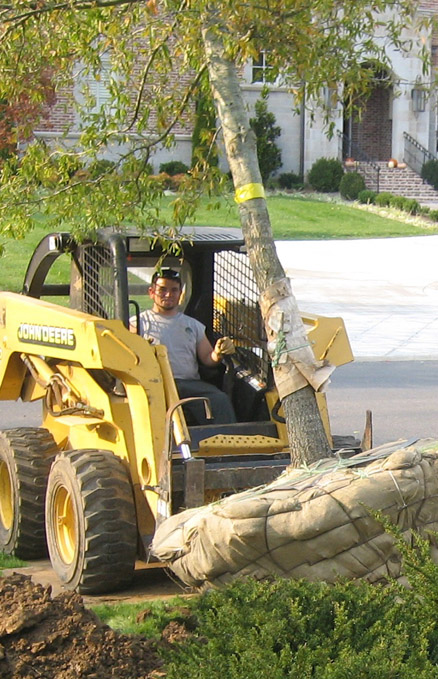
2. Transplants – Although this is best done during a tree’s dormancy period (fall and winter), transplanting your trees is a great way to ensure protection during construction. The Parke Company can advise in the proper protocol for this option and aide in transplanting during or at the end of the construction project.

3. Tree removal consultations – It is typically less expensive to remove the trees before construction begins, but first have the trees inspected for health and lifespan. The Parke Company will coordinate with building contractors and designers to assess what trees are worth protecting and worth saving. If you have begun construction already, don’t worry! It’s never too late to evaluate the health and longevity your trees

4. Chemical treatments – This is a much trickier option and takes experienced licensed professionals complete the job. However, these treatments use growth stimulators and regulators to control the growth rate of the tree as construction is going on.  Although chemical treatments do require professional help, the Parke Company is licensed company in the state of Tennessee (Tennessee Pesticide Charter #1868).

5. Root pruning – Have roots properly pruned underground before construction begins. This service will decrease negative impact on the trees, as well as minimize problems during construction.

Whether you want to use chemical treatments or simply surround your trees with a fence, The Parke Company is available to advise you with multiple options. Many times, coordinating ways to protect your trees with a professional and building supervisors before the construction begins is the most effective way to get the job done. Take the time to map out strategies for tree protection that works best for your project. For Music City to prosper and grow, construction will be necessary; however, do not forget about the health prosperity of Nashville’s trees.  The Parke Company is always readily available to give advice, provide services and answer your questions.

For more information, call 615-405-6548.

Prepping the Trees of Music City for Springtime

It’s never too early to prep for spring. While the air is still bitter cold, the warmer temperatures are not far from Middle Tennessee. So as we begin to shed our coats and scarves, take some time to take care of all of your spring-prepping needs for your trees and garden. From deadwood removal to redesigning your landscape, it’s all necessary factors to ensuring beautiful trees all year long.

1. Give your trees a “haircut” — This is a very common suggestion with tree upkeep; however, it can’t be said enough. Remove all deadwood and while you’re at it, do some crown thinning. By trimming off all those dead and/or diseased branches, you’re ensuring the safety of the tree and what’s around it, but you’re also maintaining the beauty of the tree. Crown thinning will increase airflow and sunlight, which is key for optimal growth and prosperity during the spring.

2. Stump removal — Before planting new trees, have the old stumps removed or grinded. The Parke Company can grind all apparent surface and feeder roots for their customers. Once the stumps are gone, you can easily plant some grass seed for an aesthetically-pleasing space outdoors.

3. Start shopping — Begin collecting things you will need for the spring and summer, including soil and fertilizer, seed and other maintenance items. If you’re in the market for a new tree, begin shopping different places for the best choices. Whether you’re in Green Hills, Belle Meade or Brentwood, the Parke Company will be able to help you decide what tree is best for your environment and the Tennessee climate.

4. Tree check-up — If you’ve didn’t have your trees evaluated during the fall or winter, it’s not too late. Have the Parke Company do a comprehensive health evaluation of your trees so you know how to properly care for them during the spring. Not only will they be able to tell you disease and insect information, but also soil and water conditions.

5. Redesign your landscape — The citizens of Nashville are trendy people, and that’s even reflected in their yard. Map out your redesign plan your garden or flowerbed. From West Nashville to Franklin, plan what kind of trees that work best for your area. Make a schedule of your weekly landscape upkeep, such as cutting grass, weeding, etc. The Parke Company is always available to answer any questions or guide you through the process.

Spring is only weeks away, so it’s time to begin planning. It’s up to you whether you do a little at a time or all at once, but these are sure-fire ways to be ready for the rush of spring. For more information about the Parke Company and their services, call 615-405-6548.