
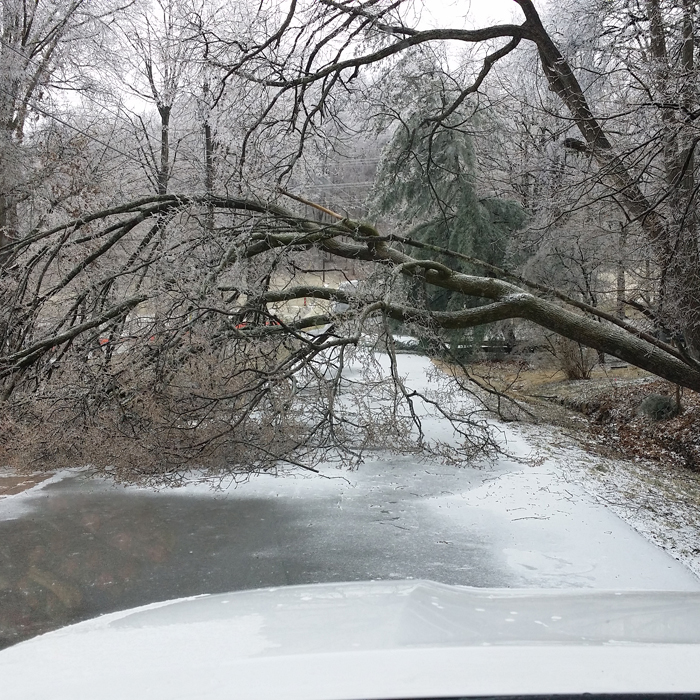
 Emergency tree care service might not be something you frequently think about, however after the severe weather we’ve received (and the fires our neighbors in East Tennessee have experienced), it’s important to have a plan. We ask all our clients to take a moment and make sure they have everything in place if the time ever comes for an emergency. As the weather starts to turn and winter weather is more of a possibility, take note of the services our arborists offer when trees or branches fall and block roadways, homes and other structures. We offer a variety of tree services and emergency tree care so be sure to keep our number on your speed dial!
So why should you need tree services? Aside from alleviating the stress that might come with a disaster, the importance of an arborist readily available can mean the difference between major or minimal damage to a structure. It can also mean that you are less likely to have to deal with the damage long-term. Having a company you trust for all your other tree care and landscape needs can speed up the process when it comes time to contact us. But just in case you need some additional convincing, here are three solid reasons why you need to have tree services on hand:
What to Know About Our Emergency Tree Services
We get to you faster
Having a tree care company that you can trust means you spend less time worrying about who to call when the emergency happens. With an existing relationship with a reputable and certified company, you can be at ease knowing the job will get done quickly and efficiently. Plus, as an existing customer, you can benefit from other perks of our landscape and tree care services. These services include snow removal or landscape decorating.
We can do preventive care to avoid unnecessary damage
It’s never too late or too early to do preventative care for your trees. Our arborists will come over, check the healthcare of your trees, treat any existing diseases or problems and suggest ways to prevent any other issues in the future. Though an investment on the front end, preventative tree care is a great way to avoid unexpected and expensive costs should a large branch fall down on a car or a tree fall in your driveway.
Provide an efficient solution so you get back to your life
We understand that bad weather can be stressful, especially trying to figure out how to get to work, school or the grocery store. The last thing you need to deal with is how to properly remove a tree from your driveway. Let us handle at least one inconvenience for you while the weather is bad! We can remove the tree so you can get back to your daily life fast and efficiently.
Emergency tree care services is our speciality. With years of experience and certified arborists on staff, we understand the urgency of the situation. We work fast and we get the job done right. We also offer other services including snow removal, tree health care and much more! Interested in learning a bit more? Give us a call today for a consultation!