The Parke Company is Nashville’s trusted landscaping and tree service. We are locally owned, and here to serve you.
The Parke Company
Avoiding Common Landscaping Mistakes
If you are an avid DIY enthusiast, you’ve probably taken a stab at doing a little landscaping in your Nashville lawn. The upside of DIY projects is the satisfaction of learning new skills and using them in a hands-on project. The downside is when you discover your knowledge is an inch deep, but the topic is a foot thick. That’s when the mistakes start showing up.
While many of us grew up pushing a lawn mower and pulling weeds from our parent’s lawns, these experiences don’t really count as in-depth lawn care training. That said, the founder of The Parke Company graduated from his parent’s lawn to cutting grass for neighbors and started his business while still in high school. Thirty years later, he is a certified arborist and has a deep understanding of landscaping services and tree service issues.
Most of us don’t go in that direction.
All of us want our lawns to be attractive and nearly everyone will have a stab at landscaping. However, almost everyone will make mistakes in their efforts to beautify their outdoor space. Some mistakes can be costly, some can be time consuming, and others simply end up disappointing.
Lawn Care Mistakes to Avoid
With more than 30 years in the lawn maintenance business, the pros at The Parke Company have seen just about every type of lawn care and landscaping error possible. Listed below are some of the most common and how to avoid making them yourself.
Scalping the Grass
Everyone wants their lawn to look neat. Neat being defined as having that “just cut” look. Unfortunately, this perception of neat leads many homeowners scalping their lawns. How high or low you mow the grass determines how much moisture will evaporate from your yard, how healthy the grass plant is, how thick (or sparse) the grass grows, and impacts the habitat of both desirable and undesirable insects and pests. The solution is to know what kind of grass you have and what its optimum height is. Professor Google can give you the information with one or two quick searches.
Not Researching New Plants
Young plants and trees are not puppies. You cannot judge their mature size by the size of their paws. If you plant a new shrub or sapling without considering its likely mature size, you are in for a problem. Shrubs planted near the house could block a window in a couple of years. Worse yet, trees planted too near the home could result in roots invading the foundation. Before you plant anything, make certain you understand how big it can get. Consider how that mature size will impact the area immediately around it.
Go Easy on the Lawn Gnomes
Ornaments and hardscapes have a place in a lawn. But too many of these items will detract rather than enhance your lawn. Use ornamentation sparingly and you will succeed in drawing attention to it.
Forgetting that Hedges are not Self-Trimming
Hedges are a great way to gain some privacy from neighboring houses or to section off a part of your lawn. But hedges are not static. They grow. If you are not shearing your hedges on a regular basis they can quickly grow to a height where you will need a step ladder to reach the top. An electric hedge trimmer should be purchased at the same time you buy the hedge shrubs.
Pruning at the Wrong Time
If you have flowering bushes you absolutely need to know when to prune and when to leave them alone. Failing to prune a shrub such as forsythia at the correct time can result in the loss of the very buds that bring you the beautiful blossoms.
Do any of these situations sound familiar? We haven’t even touched on taking care of the soil. Landscaping and lawn maintenance takes on a whole new complexity than when you were a kid because now it’s your lawn and your investment.
Want help? Our fully knowledgeable professionals can take on part or all of your Nashville lawn maintenance tasks. Call us now!
2018 Guide to Property Irrigation: Everything You Need to Know
The Parke Company is Nashville’s leading landscaping services provider, specializing in tree service, lawn maintenance, hardscape installation, and, of course, irrigation systems.
We have been providing irrigation design, installation, and system servicing to new Nashville construction and century-old landscapes for more than 30 years. We don’t advocate that you attempt to design and install an irrigation system as a DIY project, but we do believe that as the property owner, you should have a working knowledge of how an effective system works.
That’s the objective of this guide. We want you to understand how an effective irrigation system can nourish your investment in landscaping, conserve water, and avoid the very real and costly dangers of an improperly pressurized system. With that in mind, we will walk you through the basics of design, equipment selection, installation, and maintenance of a modern irrigation system.
Hopefully at the end, you will be able to evaluate your existing system or make informed decisions if you are investing in new irrigation.
Irrigation System Design Basics
Measure Your Lawn.
Keep in mind that all the data gathered during this stage is recorded to scale on a software program that will become the “map” of your irrigation system. Because the irrigation system is essentially all about pressure, measuring distances and lawn elevations has to be accurate to avoid dry spots.
Measuring the property can be accomplished with a low-tech tape or a high-tech laser range finder, or even GPS calculations. Property on the lawn (like your house, outbuildings, etc.) need to be measured and plotted as well. This is also a good time to locate and plot trees and existing garden beds.
If your property has a slope, it’s important that changes in elevation are measured and plotted. To determine elevation, all you need are three satellites, a GPS, and a program that calculates all the variables. A DIY method is a bit less sophisticated and involves two stakes, a line of string, a level, and a measuring tape.
Measure Your Water Supply.
This measurement is critical. A mistake here could cause “hammering” in your water line and create a need for expensive plumbing repairs. Ultimately you are looking for pressure (PSI) and volume (GPM) to determine the layout and equipment that will effectively irrigate your lawn. If you are serviced by a water company, they are the most accurate way to determine PSI and GPM.
The process that our expert irrigators use involves checking with the water company for the average static water pressure available to your home, measuring the diameter of the water supply line, and in cases where there is a regulator between the meter and the intake pipe, using a gauge to measure the actual pressure in the home’s plumbing. These measurements are important because we will use them to decide where to tap in for the irrigation system.
Once we determine how much pressure we have to play with (PSI), and the maximum amount of water flow (GPM) available, we can start to lay out the system knowing how much pressure will bleed off during irrigation based on product specifications. This will tell us how to design the system and where to install the sprinklers for optimum coverage.
Select Spray Heads
At The Parke Company we are big advocates of pressure regulating spray heads. The water supply pressure from Nashville, or just about any municipality, can and will fluctuate. When that occurs, it can impact the efficiency of your irrigation system, namely in overwatering or in underwatering.
Pressure-regulating spray heads are products that include a built-in regulator that maintains a more constant pressure for optimal nozzle performance. Typically for spray nozzles, 30 psi provides the best performance. For rotary nozzles, the preferred operating pressure is 40-45 psi. Correct nozzle pressure helps the nozzles distribute the water more evenly and reduces water waste caused by excessive pressure.
Plot the System
Our next step is to plot where the spray nozzles will go and what type of nozzles we will use (cull circle, half circle, quarter circle, or rotary). The placement of these nozzles determines the coverage provided. After that, we need to divide the lawn into zones, designating areas you want to irrigate as a group. The idea is to spread out the watering, preserving the pressure and maximizing the water flow.
Using the product specification sheet, we can determine the water flow rate required for each zone. If a zone exceeds the available flow rate, we can simply break out some of the nozzles and create a new zone.
As you may be suspecting at this point, you most definitely are going to need an automated system with robust control and scheduling capabilities.
Once the nozzles are located, it’s time to plot the pipes and zone valves. When selecting pipe, we always ensure the size of the pipe will be adequate to pull the water flow we need for the “thirstiest” zone. In addition, we plot the location of a backflow preventer, which will eliminate the possibility of contaminating your clean water supply.
Installation Basics
Installation starts by flagging the location of each nozzle. Nozzles are spotted so there is 100% coverage meaning the spray from one nozzle will reach the spray head of the nozzle next to it.
As you might imagine, there is a lot of trenching involved in installation. Because Nashville has relatively mild winters, we only dig down 12” for the main line and 8” for the laterals. We will use a trencher to speed things along but even so, there is a great deal of hand trenching required. So, step one is to dig all of the trenches.
To get a feel for what the piping grid looks like, let’s walk through how the water gets from the supply line to the sprinkler head.
The Pipeline
We will tap into your water supply line at a point between the water meter and the house. Obviously, we need to turn off the water when doing this, but the process takes very little time. Once we install a connection to the water supply line, we install an irrigation system shut-off valve. With this valve closed, we can turn the water back on to the house.
The main line runs from the shut-off valve to the valve box. Inside this box is a manifold consisting of a series of electrically operated valves. One for each zone. So, if your design has three zones, the manifold box will have three valves each connected to an outgoing zone pipe. The valves are connected to a low voltage controller cable that runs back to the timer and programmer. The valves automatically open and close per the schedule entered into the timer.
The zone pipe provides water and pressure for the lateral lines, which feed directly into the sprinkler heads.
Sprinkler Heads
Sprinklers come in a variety of configurations. We have already selected the sprinklers we want and where we want them based on the maximum water flow (GPM) available. The ultimate objective of the sprinklers is 100% coverage and our placement and type strategy assure that goal is met.
There are a variety of connections that can be used to mate the sprinkler with the lateral line. Once that has been done, the sprinkler is stabilized with some dirt in an up and down position with the head even with ground level.
Sprinklers are tough, but if they are sticking up out of the ground somebody is going to run a lawn mower over them or hit them with a weed cutter and do damage.
Controller
The controller is the brain of your irrigation system. It decides when and for how long each zone will be activated. It can communicate with a rain sensor and stop irrigating when nature takes over the job. The better models can also take mandated conservation efforts into account, like watering on odd days only. At The Parke Company we will make a recommendation on controllers but the final decision is yours. We can install and program all major brands.
Controllers can be located inside or outside, although outside requires protective covering and a direct connection with the electrical system. Garages tend to be popular spots for these devices. Interior installations require drilling through a wall to run conduit containing the control cable to the controller, and access to a nearby outlet.
Once the control cable is connected, and the system is programmed, you have a bare bones irrigation system ready for the final phases of installation.
Flush the Lines
With all the cutting, gluing, crimping, digging, and other activity, the pipes are likely to have dirt and debris in them. This material needs to be flushed out so that sprinklers will not be clogged from the inside. To accomplish this, all of the sprinkler heads are removed, and the irrigation system shut-off valve is opened to charge the system with water.
We let this flush run about 15 minutes then close the cutoff valve and replace all of the sprinkler heads.
The final step is backfilling the trenches. Care needs to be taken not to dislodge the sprinkler heads from their up and down position. The dirt is compacted to prevent low spots from forming. Then, using seed or sod, we restore the lawn that was disrupted by the trenching.
What We Didn’t Tell You
There are two components to an irrigation system that we didn’t mention because we didn’t want to confuse you about how the water flows through the pipes. Both components are important. One is required by code and the other is a must have maintenance feature.
A backflow preventer device ensures that water in the irrigation system cannot be sucked or siphoned back into the main supply line of the house. Nashville’s Metro Water Services requires that this valve be placed on the main supply line immediately behind the water meter.
The second item is a drain valve for the irrigation system. Our winters aren’t all that cold but they are cold enough to freeze the water in your irrigation pipes. If that happens you will have a major repair on your hands, not to mention a new pond in your lawn when you first turn the water back on. There are a number of ways to drain your system, but the best way will be determined by the terrain. Once we have inspected the lawn we can plan for effective drainage.
Why You Need The Parke Company to Install Your Irrigation System
We know Nashville and the surrounding communities. We know the soil, the species that thrive (and fail), and we have been at this work in Nashville for more than 30 years. The people in Nashville are very pleasant but they are also practical. They won’t let you stay in business for three decades unless you have a stellar reputation for delivering as promised.
We have the experience, staff, and resources to design, install, and maintain irrigation systems of any size anywhere in the Nashville area. Call us today and experience The Parke Company difference for yourself.
Emergency Tree Service: How Fast Response Times Will Save You Money
Nashville has more than its fair share of wind storms. In fact, in 2016, Nashville was cited as the windiest city in the country, with 11 serious wind-related events. Inevitably, when the wind seriously kicks up, some Nashville trees will be knocked down. Snapped limbs and uprooted trees can create seriously dangerous situations and destroy property. When that happens, you are going to want a qualified tree service to be able to respond quickly and stabilize the situation.
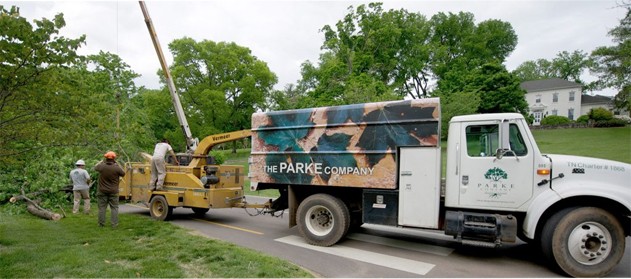
For more than 30 years, homeowners, businesses, and even municipalities have been calling The Parke Company for emergency tree service. We have the resources, and more importantly, the specialized staff to rapidly respond to tree emergencies. Rapid response can defuse dangerous conditions and prevent or minimize additional damage to property.
Operationally, emergency tree service presents the most challenges to a professional landscape services. The need is immediate, and more importantly, not everyone is trained in how to safely drop a split bough or an entire tree. At The Parke Company, emergency tree service has become an important part of our business, and we are staffed with the experts to handle the task.
What Rapid Response Means for Municipalities
When bad weather hits, it doesn’t discriminate. Homes, businesses, and communities alike all take a hit. But for municipalities and counties, the challenges that fallen trees and dangerous limbs present can have a wider effect on the safety and economy of the community than any individual house or shop. If streets are blocked, if power lines are threatened by dangerous trees, or if storm drains are clogged by wind debris, a town can experience serious issues.
Clearing roads is a priority. A community can have excellent emergency services, but if their vehicles can’t reach where they need to go, it’s the same as if those services didn’t exist. The net result leaves medical assistance, fire departments, and police severely restricted in the services they can render. While not a municipal emergency service, repair crews from utilities are also essential to mitigating dangerous conditions and hastening recovery. Like emergency services, they can’t do their job if they can’t get to where they need to go.
And there’s another cost for the community. After the event, the municipality’s ability to get things back to normal will be evaluated by the residents. A town with a responsible, well-executed emergency response plan will gain a positive reputation, while one that doesn’t may be looking for new management.
At The Parke Company, we are exceptionally proud to have been selected by several communities, including Belle Meade and Forest Hills, to provide landscaping services. Those services include emergency tree service, storm damage, brush clearing, and leaf bag pickup. Our reputation, proven work quality, and ability to work within fixed budgets has made The Parke Company a go-to resource for municipalities.
What Rapid Emergency Tree Service Means for a Homeowner
If a storm has created a need for emergency tree service at your home, a fast, professional response by trained experts can end a potentially dangerous and damaging event. Minimizing damage, and most importantly, rendering a home safe, can save significantly on the potential cost of the event.
The biggest challenge facing a homeowner needing emergency tree service is, well, the fact that it’s an emergency. You need help now. If the wind event was areawide, there are going to be plenty of your neighbors with the same need. Demand for tree service may outstrip supply. If you don’t already have a relationship with a qualified emergency tree service, you may find yourself waiting and paying a premium when the crew does show up.
At The Parke Company, we believe the best way to save money on emergency tree service is to minimize the need for it before a storm hits. We’ll talk about that more later.
Keeping Emergency Tree Service Affordable
The way we keep our emergency costs competitive is our triage approach to emergency tree service for our customers. We send out teams that deal with threatening or blocking trees. They deal with trees that are leaning on structures, across utility lines (with coordination of power company), or blocking access. Then they are off to the next call and will return with the equipment and crew needed to do a cleanup.
Using this triage technique allows us to provide our customers the immediate assistance they require to remedy an unsafe condition or access to their property. The follow-up visit takes place when things are calmer and a full complement of equipment can be deployed.
While we are there, we highly recommend that one of our certified arborists evaluate the condition of any remaining trees. If a tree is a likely candidate for removal, we can accomplish that while we are onsite. When we are done, all of the tree debris will have been removed or chipped into mulch.
Not surprisingly, we have a lot of experience with insurance companies, and we are happy to assist you in submitting your claim. We have worked with most of the companies who write homeowner insurance in the Nashville area.
Common Mistakes Made in Emergency Tree Service Situations
Storm damage can be unsettling. Many times, a home represents the largest single investment a family has, and their desire to inspect and protect their house after a storm is understandable. However, many times that desire to protect the castle overrides more effective thinking. Here is just a small sample of bad behaviors and actions to avoid during an emergency tree service event:
- Be a witness, not a victim. Trees that appear solidly supported, or stuck fast on the ground, often shift or roll, causing personal injury or worse. Don’t attempt tree removal yourself. Let our expert arborists check it out. Stay clear and keep passersby clear as well. If you have a downed power line, report it to the power company immediately.
- Beware the expert with a chainsaw. Unfortunately, when there is a big demand for emergency tree services, some people represent themselves as qualified tree experts because they own a chainsaw and a pickup truck. Before you engage anyone who is soliciting you, ask for a business license and a certificate of insurance.
- Avoid insurance feuds. Insurance coverage is complicated, and it can get even more complicated if your neighbor’s tree blows over and damages your covered property, or vice versa. The key to coverage is the health of the tree. If a tree was healthy, the policy that covers the damaged property will pay for the damages (less the deductible) regardless of who the tree belongs to. However, if the tree was diseased, the question of liability is not clear. A report from a certified arborist can provide an accurate evaluation of a tree.
How to Minimize the Cost of Emergency Tree Service
At The Parke Company, we are ready to respond to your need for emergency tree service, but we are also ready to help you minimize the odds of you ever needing it. The best way to avoid the expense, danger, and inconvenience that storm-damaged trees can bring is to take preventative steps before the storm hits. For more information on those steps, check out our emergency tree service blog.
The bottom line is this: Your landscape is an investment, just like your house. It requires maintenance to keep its value. If your carpet is getting thin, you will replace it. If the exterior paint is peeling, you will be on the phone with a painting contractor. The reason you take these actions is because you can see the problem and you want to protect your investment.
With trees, you often can’t see the problem until nearly all the value is gone. Trees get old, they get sick, and they get wounded. Often you don’t notice these problems until a strong wind blows them over, or a piece simply falls off.
If you take advantage of the tree and landscaping services that we provide, you can rest assured that your outdoor investment is being maintained as well as your home investment. Call us today and let’s talk about ways we can get your outdoor assets contributing to the overall value of your property.
Emergency Tree Service in Nashville: How We Will Help You Handle a Bad Situation
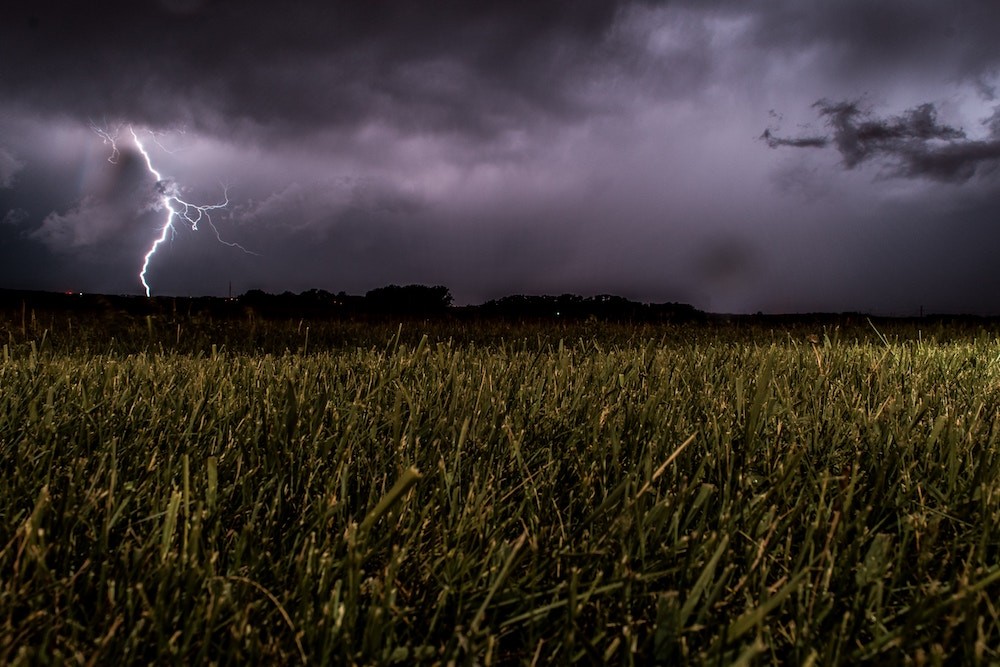
U.S. News & World Report ranked Nashville, Tennessee as the 11th best place to live in the United States. Having deep roots in Nashville and the surrounding area, The Parke Company fully understands and supports this finding (in fact, we think that we could give the number one place, Austin, Texas, a run for its money). However, along with the historic music scene, extensive culture, winning sports teams, booming job market, and the country’s best barbecue, life in Nashville can also mean extreme weather. Hail, snow, thunderstorms, extreme heat, sustained high winds, and even tornadoes sometimes spring up without warning and have historically dealt serious damage to the area.
These freak storms not only wreak havoc on transportation, agriculture, and your Saturday afternoon family cookout, but they can also cause extensive damage to your property’s landscape and trees. High temperatures can dry out your trees and plants, making them more susceptible to splitting and breakage. The weight of heavy snow can snap trees and limbs and crush plants and shrubs. High winds and tornados can uproot trees, tear off branches, and rip up gardens. Hail can flatten or perforate unprotected leafy plants. Thunderstorms can cause extensive flooding and erosion.
But don’t fret. Much of this can be prevented. See how The Parke Company, and our 30 years of landscape and tree emergency preparation and response services, can help you deal with damages caused by a recent storm or prepare for storms to come.
Tree and Landscaping Services – How The Parke Company Can Help Repair Damages Caused by Severe Weather
As the wind begins to howl, rain and hail pelt your windows and roof. You glance outside at the rapidly darkening clouds. In the instances of illumination caused by lightning strikes, you witness with growing despair the scene of slowly increasing devastation that was your beautifully landscaped lawn, gardens, beds, and trees. The wind has knocked down hanging pots, flipped over lawn furniture, torn up plants, and snapped the old pine tree nearly in half. The torrential rainfall has eroded your sloping beds and is pooling in the low areas of your lawn, slowly undermining the root structure of your prized dogwood trees.
Sound like a nightmare? That’s because it is. However, this nightmare is an unfortunate reality for many people in the Nashville area every year. If you are lucky, you have previously consulted The Parke Company, and together we have developed a strategy to best prepare for and mitigate damages to your property. If not, you could find yourself in the morning, surveying the damages to your landscape and trees, awestruck and unsure of what to do next.
First step: Call the emergency tree and landscape professionals at The Parke Company.
Our landscaping design, building, emergency service team and International Society of Arboriculture (ISA) certified arborists have years of experience in all aspects of emergency response and will work with you every step of the way. We have the knowledge and know-how to assess your specific damage and develop a recovery plan that best fits your property and budget.
From tree removal and disposal to land and brush clearing, leaf vacuuming to stump grinding, irrigation and tree repair to chipping and mulching, we have the skills and equipment necessary to get your landscape back to normal as fast as possible. Our extensive experience in the Nashville area means we know the weather and the damages it can cause. This also means we know how to best clean up your property and what steps we can take to prevent such damages from happening in future storms.
Unexpected storm damage to your landscape and trees is an unfortunate occurrence that can leave you feeling overwhelmed and helpless. The Parke Company is here to help you through this process as painlessly as possible.
Tree and Landscaping Services – How The Parke Company Can Help You Prepare for Severe Weather
It doesn’t have to be this way. Nashville natives ourselves, we at The Parke Company know that a severe storm can arise out of nowhere and cause extensive and costly damage to your landscape and trees. You most likely have automotive and home insurance to cover damages caused by storms to your vehicles and house. Why not invest in preventative tree services and landscaping services, from The Parke Company, that will reduce or eliminate damages caused by extreme weather?
Our team of landscape professionals and ISA certified arborists has years of experience preparing trees and landscapes for the wide variety of extreme weather that can impact the Nashville area.
No matter your property, through a consultation and individualized preparation plan, we will help you take the necessary steps to best prepare for the upcoming storm season.
First, we will thoroughly inventory your landscape features and trees. Our team will specifically look for ways to make your property more storm-resistant by storm-proofing your trees and plants, mitigating garden hazards, and reducing potential drainage or erosion problems.
We will then develop an individualized, and prioritized, plan for addressing your specific needs. Your plan will include the various tree services (tree pruning, deadwood removal, weight reduction, cabling, or outright tree removal), plant bed alterations, irrigation services (installation, maintenance, and testing), and preparation strategies (such as interior storage spaces for hanging plant and outdoor furniture) that will have the greatest storm-mitigation impact on your property.
Finally, we will work with this prioritized plan and your budget to prepare your property for storms to come. Having seen it all over the past 30 years, we at The Parke Company stand by our assertion that the best way to reduce the negative impact upon your property caused by extreme weather is to be prepared.
The First Step in Storm Damage Mitigation: Call The Parke Company, Nashville’s Premier Landscaping Company, Today
Whether you are faced with an emergency tree removal or want to save yourself money in the long run by taking advantage of our storm preparation services, reach out to our team of local tree and landscaping service professionals today. Together we will develop a comprehensive plan that works within your budget to address your specific needs. With deep roots in Nashville, it is our goal to provide you with the highest-quality service and to be your go-to for all of your landscaping needs. Give us a call or schedule a landscaping service consultation to find out how The Parke Company can help you.