Invasive Species Plague Nashville Trees and Plants

Invasive plant species are nothing to laugh about. Though self-explanatory, these species can be dangerous for your “urban forest”, including your trees. Not only are they hard to identify if you’re unsure, but they also are hard to get rid of without professional help. The Parke Company can help in identifying these species and show you the proper steps in getting rid of your invasive species.

According to the UGA Center for Invasive Species and Ecosystem Health, there are 403 invasive species reported within the state of Tennessee including herbs, grass, trees, shrubs, vines and aquatic plants. Annually, invasive species cost the state of Tennessee about $2.6 million. Davidson County is the second largest county with the most reported invasive species at 293.  Though prominent, if you can identify and understand what these species do, you’re one step closer in making sure your trees and yard stays happy and healthy.

Top four invasive species in Nashville, Tenn.:

1. Bush Honeysuckle (Asian Bush Honeysuckle) — This is a very prominent bush around Middle Tennessee, and is made up of about five species. The scrubby underbrush spreads by birds who feed off their fruits. Originally native to Asia, these invasive species can harm native plants and have negative impacts on wilderness regeneration. This shrubs can range anywhere from five to 20 feet and produce yellow flowers and red and orange fruits.

2. Japanese Honeysuckle — The Japanese Honeysuckle is a vine that grows and twists up small trees and limbs. Native to Japan and Korea, this perennial has few natural threats in the Nashville area. It grows fast and can overtake native species quickly. Its prey (small trees and shrubs) can die if the honeysuckle grows and twists too tightly around the plant preventing water intake. In addition, the dense growth of the vine can prevent necessary sunlight. The Japanese Honeysuckle can reach up to 80 feet long and can reach up to 2 inches thick. During the spring and summer, the plant has fragrant white and/or yellow flowers.

3. Japanese Privet: Similar to the Japanese honeysuckle, the Japanese Privet can dominate plants by dense growth and prevent sunlight, which in turn, can kill native species. Often found along fencerows, streams and forest margins, this plant has rapid reproduction rates in a variety of habitats, which makes them hard to eradicate. Japanese Privet can grow up to 30 feet tall, with shallow but extensive roots. With aromatic blossoms during the springtime, the branches arch downward.

4. Japanese Stiltgrass: This grass grows in low light and moist to dry locations. The plant sprawls out in large patches throughout these areas invading other plants. The species has long, pale green leaves that range from 1 to 3 inches. The stiltgrass can reach a height of 3.5 feet virtually killing off native species that can’t compete.

From Bellevue to East Nashville, invasive species are common problems within the city, as well as the surrounding county.  It’s important to be able to identify and treat the problem before they harm your trees and other plants. The Parke Company can help answer any questions or help identify any invasive plants you might have on your property. For more information or a free estimate, email danbeasley@theparkecompany.com.  For more information on invasive species, visit www.tneppc.org.

Risks of Removing Vines Without a Professional in Middle Tennessee

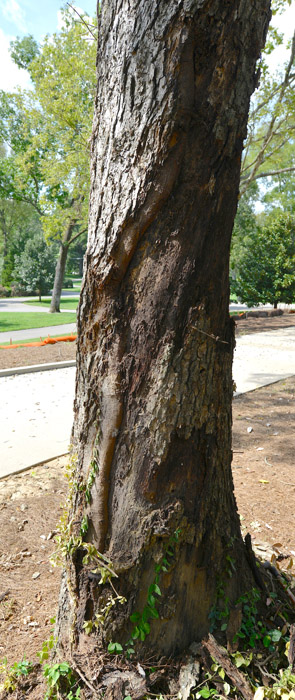
Vines can convey a variety of meanings, especially depending on the setting. For example, ivy crawling up Belle Meade plantation can be both beautiful and majestic. However, vines crawling up your oak tree in your West Nashville home can often be annoying and look invasive. However, before you go crazy with the garden sheers, consult with the Parke Company on removing the vines for you. Removing vines without proper knowledge or background can often damage the tree and put you in harm’s way.

Top three reasons not to remove vines yourself from your trees:

  • Cambium Cell Layer — It has the word “cell” in the name, so it is obvious how important this layer is. Removing vines yourself could damage the tree’s cambium cell layer causing permanent damage. The cambium produces new bark and wood throughout the year. If damaged when uprooting vines, it could potentially damage the growth of the tree.
  • Roots Merge — The cellular tissue of the vines can merge with the tree. Cutting the vines would not completely remove the plant, as the root would still be intact. Therefore, the vines would just keep growing back to much of your annoyance.
  • Safety — If you remove vines/ivy yourself, you can potentially bring pull down dead branches, bird’s nest or even a hornet’s nest. To avoid these unsafe circumstances, the best bet is to call the Parke Company.

Removing the vines from your trees yourself might seem like an easy and “cheap” thing to do; however, it’s not a long-term solution for your tree, nor is it a safe procedure. Make sure you use an expert who understands the type of tree you are working with, how the vine is growing on it and how to remove it safely with no permanent damage to the tree. For more information about vine removal or questions about the Parke Company, call (615) 405-6548.

April Showers and Lightning Damage

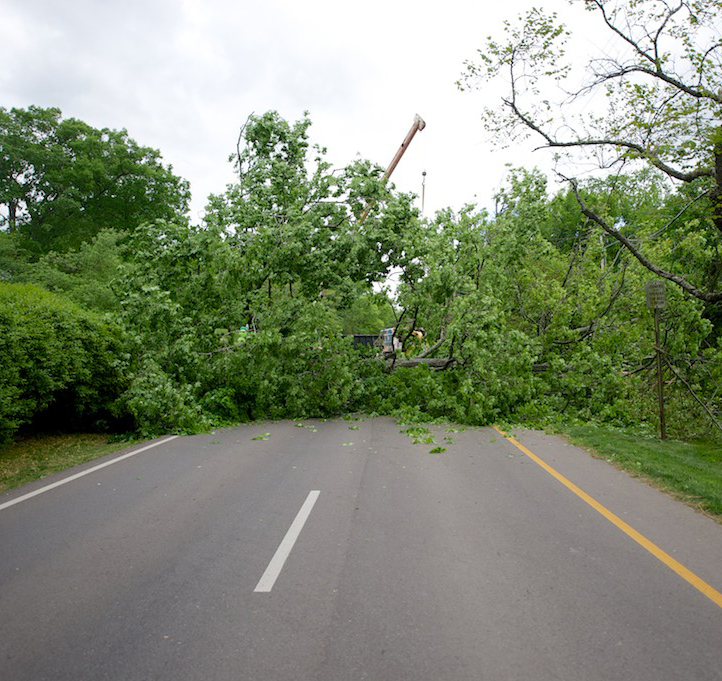
parke-company-emergency-services-tree-landscape-irrigation-maintenance-blog-April-Showers-and-Lightning-DamageApril showers bring May flowers, right? Well, unfortunately they can also bring lightning damage, particularly on your trees. Nashvillians are patiently waiting while the multiple storms pass through the Middle Tennessee area, but it’s important to understand the signs of damaged trees and limbs as they come barrelling through. Trees are incredibly susceptible to lightning and should be monitored regularly by the Parke Company’s certified arborists.

Trees are especially vulnerable to lightning damage because of their height. Trees isolated on hills, near water, vast lawns, landscapes or in fields are even more likely to be struck. And depending on the severity, lightning strikes can completely destroy your tree. (In which case, emergency tree care is necessary.) But there are times when trees are damaged and it’s hard to determine if it’s due to lightning because the symptoms do not manifest until weeks later. That’s why it’s important to call a certified arborist who will be able to assist you with proper tree care and guide you in a treatment plan for the affected tree.

Symptoms of lightning damage include:

  • Your tree dies within a few days or weeks after being struck
  • Your tree loses its leaves unexpectedly
  • Sunken or “dead” spots appear along the trunk or branches
  • Cracks develop down the side of the trunk

Trees are rather vulnerable to lightning so it’s important to protect them, especially if they are protected or historic trees. The Parke Company can install protective measures for your trees to decrease the likelihood of damage from a lightning strike. This is especially important if trees are near your home or business. However, these are difficult systems and should not be done without a professional arborist.  In order to ensure long-term protection and correct installation, call the Parke Company and speak with a certified professional about installing one in your landscape.

Tree care doesn’t just stop with check-ups and evaluations. If you notice that your trees have symptoms of lightning damage, call the Parke Company to discuss options for tree health care and lightning protection.

Landscaping, Construction and Tennessee Wildlife: Protecting Exposed Tree Roots

Landscape, construction or Tennessee wildlife can be hard on those exposed tree roots in your yard, especially weed eaters or the metal sides of a mower.  (Oh, and let’s not forget that it can damage the equipment too!) And most of the time the big, unanswered question is, “oh… is that bad for the tree?” Well, constant running over surface roots will weaken them and create entrances for insects and other infestations. However, if the damage is done, consult the Parke Company on what options are available on proper tree care and how to fix it.

Look Out! Tree roots are a problem all through Nashville — from Madison, TN to Bellevue. Consult with both your Nashville landscape and maintenance company for the best ways to avoid the roots and the bottoms of trees. The more you and your workers are aware, the more likely you will not damage the tree or equipment.

Protect! Plan ways to protect your tree roots and tree trunks year after year by investing in tools such as a tree trunk protector. In addition, consider planting a bed around a tree to keep mowers and weed eaters outs. This method can be very tricky so consult with the Parke Company first to avoid long-term problems. But whatever you do, do not cut the surface roots out. Not only does it make the tree more susceptible to disease but it also weakens the tree and can cause potentially dangerous situation. We all know how finicky the weather in Middle Tennessee can be!

Take Care! If damage does occur, call the Parke Company right away if you start to see signs of illness or distress. Tree healthcare is incredibly important to your property’s ecosystem, so it’s vital you stay on top of it. Signs of a sick tree are dead limbs, browning leaves during off-seasons and insect infestations.

Taking care of your landscape doesn’t stop at the flowerbeds and lawns. Your trees are important as well. Be cautious when doing landscape or other activities, as damaging tree roots and trunks could be harmful. In addition, watch out for wildlife such as deer that could use their antlers to hit against the tree. This could do the same type of damage. If you notice your tree is getting ill or distressed due to exposed root or tree trunk damage, call the Parke Company to discuss tree healthcare options and other services moving forward. For more information, call (615) 405-6548.


Bison Meadow and The Parke Company: Working Together to Bring Nashville History to Life

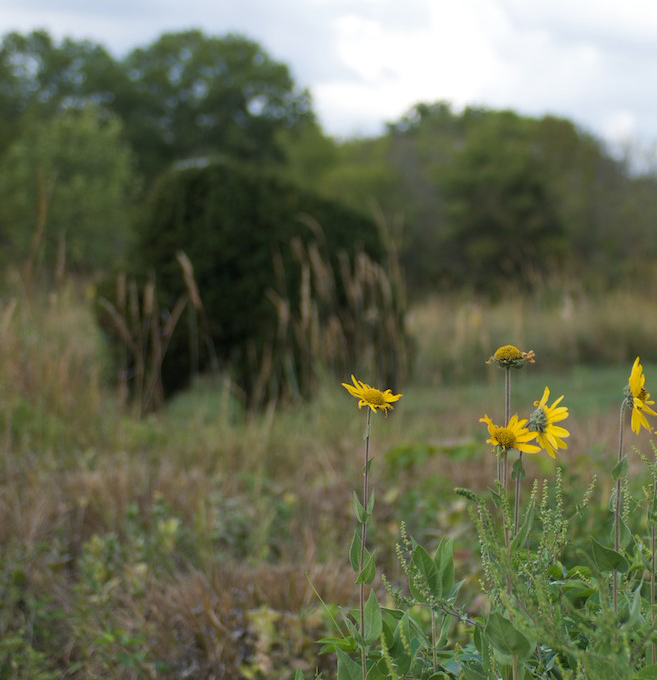
As part of the Tennessee Bicentennial Project in 1994, The City of Forest Hills established Bison Meadow. Bison Meadow, a mirror of the prairies that once prospered in the state, is filled with wildflowers, trees and Indian grass. Staying true to its history, the 2.5-acre of land is on part of the state’s Natchez Trace and embodies the wild ecosystem that was once there. (Thanks to landscape architect Tara Armistead.) As part of Natchez Trace, bison, elk and other large mammals traveled through this prairie to get to the large salt lick along the Cumberland River.

The Parke Company has since maintained the meadow and kept it true to its history. From the treecare to building the bison topiaries, the Parke Company is steadily involved in the meadow’s upkeep for the last 6 years. Surrounded by dry-stack stonewalls, funded by The Garden Club of Nashville, the meadow maintains a peaceful serenity away from the residential areas of Forest Hills.

While there are no live bison in Bison Meadow, there are shrubs throughout the property shaped like the giant creatures. The metal frames (where the trees grow from) were created by artist Alan LeQuire. When the bison trees were originally sculpted, Hicks yew was used for the topiary. Since then, the Parke Company determined that the yew was not as prosperous for the local growing zone as they hoped. Instead, they’ve deceived to convert to arborvitae, which is much more conducive to this area.

Fast Facts about American Bison:

  • Heaviest land animals in North America with weights ranging from 950 to 2,200 pounds.
  • Stand about 5 to 6 1/2 feet tall.
  • These herbivores are grazers, eating grass, twigs and shrubs. They also regurgitate their food and eat it again before it’s finally digested.
  • The lifespan of a bison can range from 12 to 20 years.

With the Parke Company’s help with its treecare, Bison Meadow will continue to be an asset of both Nashville and Forest Hill. With so much wildlife and American history behind the meadow, it’s no wonder the Parke Company took on this tree project. Located on the corner of Hillsboro Pike and Tyne Blvd., guests are welcome to visit the meadow, and encouraged to come during different times of year when the wildflowers and trees are blooming.

For additional information about treecare and shrub information, call the Parke Company at (615) 405-6548.