Middle Tennessee’s Favorite Trees

Middle Tennessee is in Plant Hardiness Zone 7. If you’re not familiar with the Arbor Day Foundation’s Plant Hardiness Zones, think of it as a horoscope for your plants and trees. Based on annual average high and low temperatures, the zones give an indication of what plants and trees will grow best, and where. A tree that is best suited for growth in Northern Montana probably won’t do as well if planted in Southern Arizona.
If you’re looking for trees to add to your landscaping, here are five of the most popular trees in Middle Tennessee which are also best-suited for growing here:

  1. Prairifire Flowering Crabapple. The Prairifire Flowering Crabapple adds color to your landscape with bright red flowers and red leaves that mature to a deep, dark green. This fairly short, ornamental tree is friendly to birds and wildlife.
  2. Red Dogwood. The Red Dogwood blooms with red flowers in the spring and displays dark reddish-purple leaves in the fall. Its red berries are a favorite for songbirds.
  3. White Fir. The White Fir is drought-tolerant, good for Middle Tennessee’s sometimes unpredictable rain fall. This tree has light-colored bark with silvery blue-green needles and grows up to 50 feet tall.
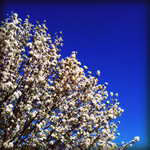
  4. Saucer Magnolia. The Saucer Magnolia is aptly named with its large, saucer-shaped flowers that fade from pink/purple on the edge to white in the middle. It’s a fairly fast-growing tree and can top out at 30 feet tall.
  5. Giant Sequoia. The Giant Sequoia is a strikingly majestic columnar evergreen tree. It produces bluish-green needles with reddish-brown cones. Able to grow and thrive in a variety of soils, the Giant Sequoia can reach up to 200 feet in the air and 25 feet wide.

Contact us if you have questions about adding some of Middle Tennessee’s favorite and best-growing trees to your landscape. The birds and wildlife in your neighborhood will be glad you did!

Common Types of Tree Service

Happiness is sharing a bowl of cherries and a book of poetry with a shade tree.  –Terri Guillemets

Many homeowners look at the majestic shade tree in the backyard and think that it’s just fine the way it is, that Mother Nature is doing her job and taking good care of it. For many trees, that is the case; but for some trees, a little human intervention is necessary.

Trees can need many different types of care services. As trees grow and mature, there are a few things that can be done to extend their lives and allow your family to enjoy their beauty and shade for years to come. For instance:

  • Crown thinning is the removal of select branches and limbs which allows for more sunlight and increased airflow. It also reduces weight and bulk in highly stressed areas of the tree.
  • If you’ve hit your head on a tree branch when mowing the yard or playing fetch with the dog recently, it might be time for canopy raising. Raising the canopy of the tree is simply the removal of the lower layer of limbs to allow for plenty of head room, all while maintaining a beautifully symmetrical and healthy tree.
  • Have you ever gotten pins or rods implanted in your bones or joints during surgery? A similar type of bolting can be used to ensure the health of your trees. When bolting a tree, threaded steel is installed in weak, cracked or splitting joints to add stability and years to a tree’s life.

Relaxing in its shade may seem like all that a tree needs to live a full and healthy life, but when your trees need a little more than that, we can provide these services and many others. Contact us to learn more about the types of services we can provide to care for your trees.

Is My Tree Dying?

3 signs that your tree is sick or dying

Your trees are part of your home. They offer shade, beauty and the peace of being surrounded by nature even in the most urban settings. But they don’t live forever.

The lifespan of a tree can vary, and there are definite signs that your tree may be sick or dying. Here are 3 things to look at:

  1. Leaves. Do the leaves look healthy and lush? Are they falling off when they should be at their peak? Is there a noticeable reduction in the number of leaves this  season compared to last?
  2. Bark. You may not pay much attention to the bark on your trees, but you’ll definitely notice if it becomes brittle and starts to fall off. You might even notice the trunk beneath looking or feeling spongy or brittle.
  3. Branches. Do the branches that once reached high and strong into the sky seems to be weak and drooping? Does it look as if gravity is winning the battle? Has the slightest breeze caused a branch to crack or even break off?

There are many reasons that a tree may get sick or even die — disease, age, drought, insects — but many of the signs are the same. If you have questions or concerns about a tree in your yard, contact us and we’d be happy to take a look at it for you.

After the Storm: When to Call a Professional

Emergency Tree Removal Before - Clarksville, TNWhen the clouds roll away after a particularly strong springtime storm, the first inclination for many homeowners to to step outside and survey the damage left behind.

You might even hold your breath as you head out the front door.

No matter the damage — minimal or downright frightening — it immediately becomes time for storm cleanup. So, when do you clean up with your own two hands and when do you call a professional?

You can do it yourself when:

  • Small branches have fallen from trees into your yard or flower beds. A little sweat and time can take care of that.
  • A small tree that you’ve recently planted comes out of the ground, roots and all. It could possibly be replanted.
  • Leaves and small debris have accumulated in your yard. Again, a bit of time and work on your part can clean that right up.

Call a professional when:

  • Branches have fallen on the roof, your vehicles or utility lines. Be sure to take pictures for insurance purposes before the work gets started. Don’t try to move these branches on your own. Think safety first!
  • An old, established tree breaks off leaving a large stump. Stumps can create hazards in your yard. Our team can even turn that tree into firewood for the winter months.
  • You just don’t want to do it yourself. Our professional team is experienced and ready to help you with post-storm cleanup. We’ll treat your home as well as we treat our own.

The Benefits of Prevention

Prevent Storm Damage: Simple Tree Maintenance Tips to Protect Your Property

At some point over the years, you’ve probably heard the phrase, “An ounce of prevention is worth a pound of cure.” It applies to so many thing in life — including the trees in your yard.

As spring and summer storms threaten the area, they also threaten to damage trees, your house and vehicles. By taking a few simple steps now, you can lessen any potential storm damage and protect your property.

  1. Get branches off the roof of the house. Large branches touching your roof are simply inviting problems. Ants and other pests use those branches as a one-way street up to your roof. And just imagine the havoc they could wreak during a storm. Strong winds can sway the branches back and forth, loosening and even removing shingles. Larger branches have the potential to fall right through upper-story windows or weak spots in the roof.
  2. Have dead or dying trees removed. Not all trees will live forever. Some have a life expectancy of 10 years or even fewer. Dead or dying trees are the weakest, of course, ready to be demolished by a good strong storm. Don’t wait for your dying trees to damage property; go ahead and have them removed when they show signs that they are beginning to die.
  3. Think about your neighbors. Good fences make good neighbors, so you want to make sure those fences are still standing after a storm. If there are branches or even full trees that look as if they could crumble your fence during a storm, take preventative measures now to make sure those trees — and fences — are as stable as possible.

For more information about preventing storm damage by trees on your property, contact us. We can visit your home and offer a free estimate of services, including pointing out the potential storm hazards facing your home.