
How to Protect the Beauty of Your Home Landscaping in Tennessee’s Unpredictable Climate

Lawnmower mowing a lawn

If you’re not too careful, you may make the mistake of assuming that Tennessee’s climate can be lumped in with other nearby states. By slapping the label “southern” on an area, you may assume that Tennessee’s yearly climate consists of dreadful summers, nonexistent  winters, and year-round warmth. 

While Tennessee could certainly be considered a southern state, its greatest diversity may not be how much it differs from surrounding states, but by how diverse the climates are within the state itself. 

Tennessee has a generally temperate climate, fostering somewhat pleasant weather year round, but its varied topography leads to a variety of climatic conditions that can be observed in the state.  

Given its wide range of topography, Tennessee is divided into six topographical regions: the Unaka Mountains, the Great Valley of East Tennessee, the Cumberland Plateau, the Highland Rim, the Central Basin, and the Gulf Coastal Plain.

The differences between mountains, plains, and valleys are vast and can make for some terribly unpredictable weather, regardless of where you’re located. 

Keeping the variety of Tennessee’s topographical features in mind, there is no one-size-fits-all method for caring for your landscape design. Here are some techniques to incorporate to your landscape maintenance throughout the year to combat a finicky climate. 

How to Protect Landscaping in Tennessee Weather

Irrigation Systems

As much as we may like to, none of us can control rainfall. It’s obviously incredibly important that your home landscaping receives the appropriate amount of water year round, regardless of the rainfall that occurs naturally. 

A simple solution to this is to install an irrigation system. By doing this, you can easily water your landscape and adjust quickly to changes in the weather. Rather than digging out your sprinkler from the back shed after you thought you were finished for the season, an irrigation system ensures that all areas of your property get the water they need to flourish all year long. 

This also includes factoring in drainage systems. The appropriate drainage system will help you deal with any unexpected rainfall or flooding, and it could be the saving grace to ensure that your landscape doesn’t drown in unpredictable weather. 

Plant with a Purpose

Proper lawn care and landscape maintenance begins before trimming and watering processes. The best landscapes are carefully designed with variable climates in mind. 

While your options for what to plant are somewhat regionally determined, there are a number of flowers and trees known to withstand a variety of climates. If you’re looking for a low maintenance addition to your landscape, one of these plants may be a wise idea if you’re looking for something that can withstand unexpected frost. 

According to Cassy Aoyagi, president of Form LA Landscaping, planting species that are native to your region is also a great way to proactively combat tenuous weather. Plants that have grown in your area for a while have had time to adapt to any common changes in the climate and the soil. These plants will be more resistant to disease and will self-adjust to many of the changes in climate.  

Proactive Maintenance

You’d be surprised at just how essential a routine cleanup job is to your property. An unpredictable climate can mean unusual growth and death that clutters your landscape. 

When trees suddenly shed leaves and branches, being unprepared for this change can pose a threat to the health of your property. Perhaps your trees drop a large number of leaves in the summer season before your planned leaf removal. Being out of season is no excuse for leaving this issue unresolved. 

If lots of leaves and branches stay on the ground, you risk leaves rotting and stifling the growth of grass and tree roots. Protecting the beauty of your landscape in unpredictable climates means being proactive and observant, quickly tending to issues when they arise and not waiting until the next season to tackle the problem. 

Swings in weather can also lead to growth of mold and fungus. If left untouched, these invaders can infect your property with disease and lead to the death of trees, shrubs, and other vital elements of your landscape. 

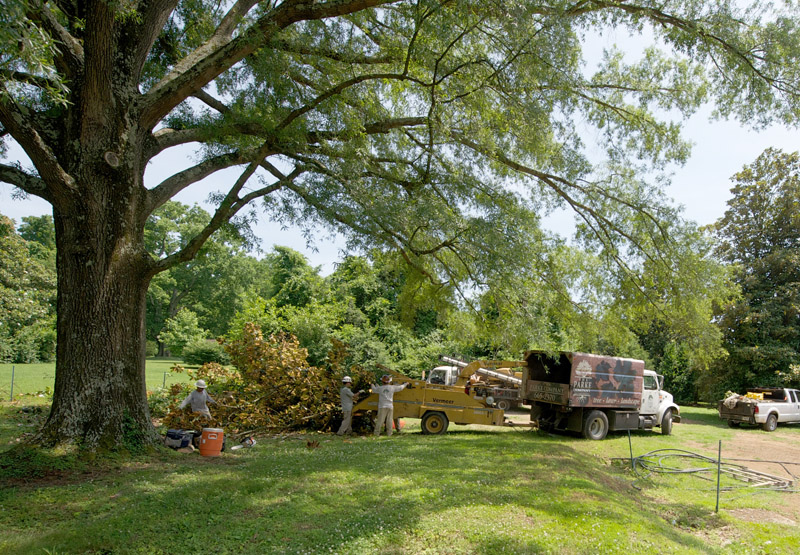
To avoid resorting to tree removal, be sure to incorporate proper tree maintenance and inspect your plants closely when there are unexpected shifts in the weather. 

Get an Evaluation 

Ultimately, there will be changes in the climate that you can’t prepare for. As the environment suffers more and more unusual swings in climate behavior, there is a chance that your property will endure unprecedented shifts in weather that take a toll on your landscape. 

The best way to protect the beauty of your landscape is by hiring a professional to evaluate your property’s needs and treat it accordingly. 

A certified arborist or lawn care specialist has the skills and know-how to critically assess your landscape’s unique needs. The Parke Company is staffed by specialists who are ready to help ensure that your property stays beautiful, regardless of nasty weather. 
Give us a call (615-350-6033) or contact us online today to see how The Parke Company difference can work for you.

5 Ways You Can Improve the Health and Life of Your Trees (Without Tree Removal)

Large tree with branches going outward

A well-maintained tree (or a number of trees) is an integral feature of every great landscape design. Trees can create natural barriers on your property, provide shade, and tremendously benefit the overall aesthetics of your property.

For a number or reasons, proper tree care is a must. Not only are sickly trees unsightly, but they can also pose a genuine threat to the safety of your property.

In the worst-case scenario, an unhealthy tree could fall in a storm. A good way to prevent that would be to cut down a tree in poor health. An even savvier way to deal with this issue is to ensure that your trees never get to that level of unhealth.

To circumvent the costs of dying trees, here are five ways you can improve their health and life without removing them.

Best Ways to Improve Tree Health

1. Plant Strategically

If you haven’t yet, the best time to conduct a tree inventory is now.

By conducting a tree inventory, not only will you have an assessment of the health of your existing trees and be more informed as to what steps need to be taken, you will also have a detailed report as to the location of your current trees.

Preventing issues with tree health starts with planting trees strategically. When you plant trees with intention, you can ensure that competing species are not planted too close to one another, that they won’t grow into power lines, and that their placement won’t conflict with anything else in your current landscape design.

2. Start with Great Soil

Vital to planting trees strategically is starting with great soil. Just like any plant, trees need quality soul to grow well.

There are a number of different factors that make soil quality important. Not only does soil serve as a reservoir for vital nutrients and water, but it also contains the microorganisms that encourage beneficial decomposition, acting as an anchor for plant roots.

Maintaining healthy trees (as well as planting new ones) begins with assessing for quality soil to ensure that your trees have a hospitable environment in which they can grow.

If you’re not comfortable testing the soil yourself, seek out a landscape maintenance professional to do the complex work for you. These professionals will evaluate the soil for qualities like texture, drainage, chemical properties, and more.   

3. Tree Trimming

As previously mentioned, trees are plants and, as such, require similar care.

Just as you would prune dead leaves from a basil plant, or cut back dead parts of a grape vine, it’s important to incorporate regular tree trimming into your tree care.

By trimming trees regularly, you can identify diseased branches and trim them before any more sickness spreads. You can also ensure that trees don’t get overgrown if they are near any other feature of your landscape that may compromise the tree’s health.

Tree trimming has a vast array of benefits from maintaining the health of trees and increasing sun exposure, to protecting against branch weakness and improving the life of fruits and flowers.

4. Pest Maintenance

The neighborhood squirrels and raccoons may be cute, but they might not be the best for maintaining the health of your trees. In some cases, an animal that choose to make a home in or near your trees could be what compromises the health and safety of the trees on your property.

Especially with young trees that are growing, and sickly trees you’re treating, a physical barrier or other repellant can keep pests from munching at your tree’s bark or building a home where they may not belong.

5. Ask the Experts

When it comes down to it, it isn’t enough to simply ensure that you maintain the health of your trees; it must be done well for them to flourish to their potential.

If you’re not confident that you can perform all of the necessary tasks to support the growth of your trees, you’ve got a few options: you could spend hours researching how to best serve the trees on your property, or you could call a certified arborist to do the tough work for you.

By trusting the landscape professionals at The Parke Company, you call rest easily knowing that your trees will be evaluated and cared for by experts who will tailor their work to the unique needs of your property.
Give us a call (615-350-6033) or contact us online today to see how The Parke Company difference can work for you

Municipal Landscaping: What’s a Tree Inventory, and How Can It Help Your City?

Old street with trees on either side

If you work in municipal landscaping, your heart’s passion is to beautify and preserve the natural landscape of your city. While every aspect of your town’s landscape design is important, tree care may be one that warrants reevaluation.

Some people think that tree maintenance is simple: tree removal, tree trimming, stump grinding. What they may not have considered, however, is that proper care for trees is vital to maintaining a thriving, green world, even in urban areas.

In addition to the procedures your city already has in place to tend to local trees, consider incorporating a tree inventory. Here is what you need to know about this important practice.

Why Are Tree Inventories Important?

What is a Tree Inventory?

As its name suggests, a tree inventory has a lot to do with accounting for all of the trees in a specific region. But it doesn’t stop at a simple roll call.

Tree inventories will take into account the number of trees in an area as well as the variety of trees recorded.

Some more sophisticated tree inventory processes will employ GPS and GIS technologies to ensure precision and accuracy of tree records. This allows those who oversee the landscape to have easy access to the locations and population sizes of trees in their city without having to rely on a potentially inaccurate map or by visiting the reasons in real life every time.

A tree inventory is the process of bringing true and precise awareness to the arboreal life of your city and efficiently recording that data in an accessible format.

How Does it Help?

Tree inventories do more than just inform your landscape maintenance professionals how many and what type of trees are present in your city. Tree inventories can also be effective for proper tree care.

On a basic level, tree inventories can be a practical way to save your city money. A keener awareness of the trees in your city can be helpful for anticipating new construction in particular regions in order to avoid unexpected costs related to sudden needs for tree removal. It can also instruct you as to which areas should be avoided for new construction.

Tree inventories are also a practical and detailed way to care for the health of your city’s trees.

Tree inventories do more than just record the type and location of trees in an area. They can also record specific reports on the health of individual trees. This can inform the certified arborists who care for your trees as to how to move forward with the treatment of the landscape.

A tree inventory records the current status of trees in the given area and can report back on needs for each tree to encourage flourishing and aid trees that may be in poor health. This can also be an effective measure for avoiding potential costs associated with sickly trees that may fall or infect other parts of the landscape, leading to the loss of plant life and presenting a hefty financial burden to your city.

What Are My First Steps?

Caring for a city’s landscape is a difficult job, and it is one that should only be performed by the best in their field.

If your city has yet to conduct a tree inventory, this is a vital practice to institute if the landscape is to be as healthy and beautiful as possible.

Your first steps should be to contact someone experienced in tree care. A certified arborist is best equipped to conquer this lengthy and arduous task.

The experts at The Park Company are committed to honoring the beauty of the landscape in their communities. Their certified arborists and landscape artists are uniquely qualified to care for the landscaping needs of Nashville and the surrounding communities.

A tree inventory may be what is keeping your city’s landscape from its best and healthiest state. Don’t hesitate to give us a call at (615)-350-6033 or contact us online today to see how The Parke Company difference can work for you.

Don’t Install New Landscaping Features Without First Doing This

Table and chairs in a garden

Variety is the spice of life, as they say. If you’re someone who invests a lot of time and energy into your landscape maintenance, you probably get a great deal of joy from creating a beautiful useful space. You may also find yourself wanting to incorporate new and exciting features to add to the beauty of your property.

If you’re often bored by maintaining the status quo of your landscape design, installing new features can be a great way to shake up the aesthetic of your property, but before you do so, make sure that you keep the following things in mind.

What to Do Before Installing a Landscape Feature

Work With What You Know

The only person who interacts with your yard on a daily basis is you. You know what has grown well in the past and which areas get enough shade or full sunlight. Mapping out these locations can be helpful for planning purposes. Use your knowledge and experience of your yard to plan any new additions accordingly.

It’s important to consider the unique terrain, soil quality, and light exposure of your property if you intend to install any new features in your landscape. While a cobblestone walkway may seem like a good idea, you know the particular incline of your property and should consider such factors when deciding what to install.

You also know best what your property will be used for. It is important to consider how the presence of children or pets in your yard will affect what you decide to install. A fountain may be a beautiful focal point to your property, but it could be dangerous if you have toddlers, or it could be one more thing for your dogs to splash around in.

When you’re deciding how to improve your landscape design, make sure that you use your previous knowledge of the property to inform your decision.  

Work With What is There

When thinking about your new landscape feature, remember that the rest of your yard is still there. That flashy gazebo or gorgeous footbridge may be just what you’ve always wanted in your yard, but if you’ve already got a pool, a back patio, and dense trees, it may only result in the congestion of your property.

Some landscape features can be moved or modified if you want to add something new to the existing design, but it’s important to consider what is already there and what is permanent.

On a less pragmatic level, it is also necessary to consider the aesthetic of your property. Will this new feature fit the theme that has already been established by your landscape design?

An eclectic property can either be a whimsical amalgamation of features or it can look like a reckless assembly. When you consider installing anything new to your existing landscape design, make sure that it will incorporate seamlessly with what you’ve already put together.

Work With a Professional

When you’re making a big change to your landscape design (or even a small one), having a second opinion is key to making sure that you don’t make any costly mistakes.

Working with a professional could give you the foresight to know whether or not the feature you want to install is feasible. While they can help you hammer out the details of installation and cost, they can also help you determine whether or not it is a wise aesthetic choice.

Consulting a lawn care and landscape professional is important because their experience can also help you envision the future of your landscape design. They will be able to foresee future issues and help you figure out how to prevent or prepare for them.

If you’re looking to develop your property and create a more exciting landscape, the experienced landscape and tree experts at The Parke Company know just how to meet your unique landscape service needs.

Give us a call (615-350-6033) or contact us online today to see how The Parke Company difference can work for you.

4 Signs Your Irrigation System May Need Repair

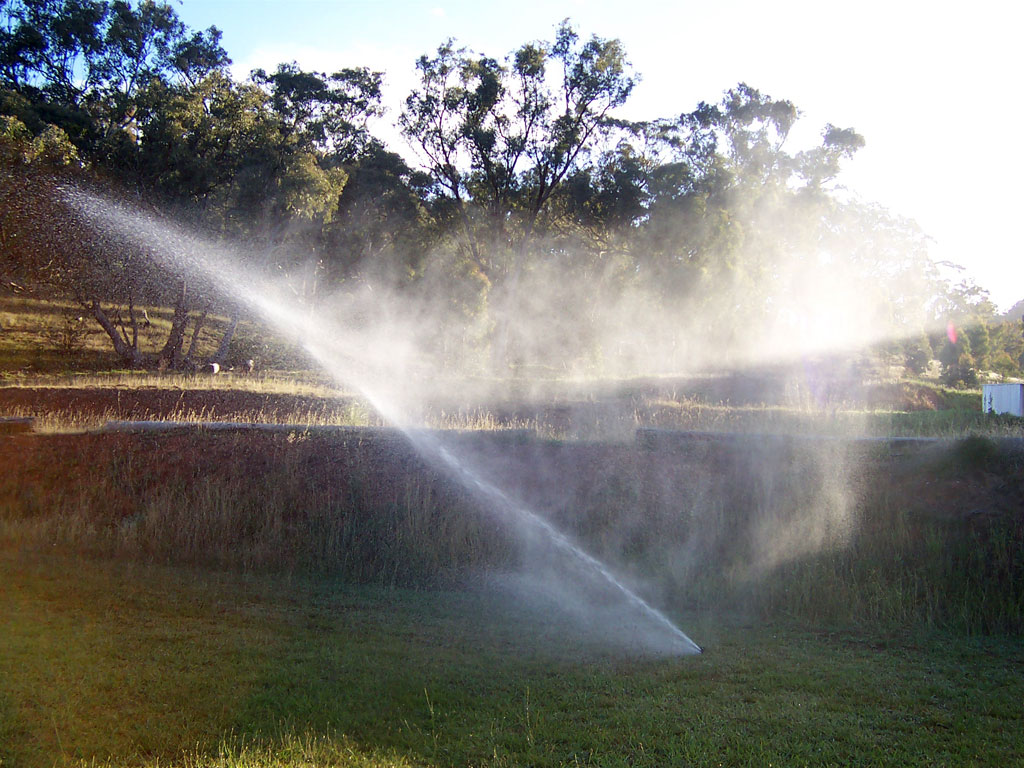
Irrigation system watering a tree

The right irrigation system can be every property owners best friend. When functioning properly, irrigation systems ensure that the beauty of your landscape design is maintained, even when the weather is less than hospitable.

Caring for finicky plants and upkeep of green grasses requires that your irrigation system is running at top performance to ensure that the moisture content of your soil remains optimal.

On the other hand, if it isn’t functioning properly, a faulty irrigation system could spell trouble. Dying plants and flooded flower beds shouldn’t be your first clue that something is up. Do you know how to spot a damaged irrigation system?

For the best landscape maintenance, check out these four signs that your irrigation system may need repair.

How to Tell Your Irrigation System Is Damaged

1. Increased Water Costs

As a prudent property owner, you should be well aware of how much your water bill typically costs – and for more reasons than one. While this cost may fluctuate somewhat from season to season, a sudden skyrocketing of your water bill for lawn care may be a sign that your irrigation system is malfunctioning.

This may be one of the first and only ways to quantifiably assess that your irrigation system isn’t working properly.

An increase in your water bill tells you that the system is pumping more water than normal onto your property, either due to a glitch in its settings or a leak. In either case, it is vital to have a lawn care professional evaluate the damage immediately before any harm is done to your property.

2. Flooding

An over watered landscape doesn’t always look like a small pond has cropped up in your flower beds. When your irrigation system functions as it should, the appropriate amount of water should be distributed to the soil.

If you notice pooling of water anywhere near your irrigation system, this lawn problem could be a sign that maintenance is required to fix a leak.  

When evaluating the leak, check to see if the excess water is only showing up in certain places or if it appears to be along the entire line of irrigation. This could help pinpoint the area of concern and narrow the focus of your landscaping professional.

This is also a good opportunity to assess your drainage systems. Flooding can also be caused by an inability to sufficiently drain excess water that collects when an irrigation system releases too much water.

3. Dry Patches

Conversely, dry patches on your property can also be a bad sign. At this point, if there are dry patches along your irrigation system, your system has likely been malfunctioning long enough for parts of your lawn to die.

It is paramount that you seek a lawn care professional immediately to quickly mitigate the situation before any further damage is done to your landscape or to your irrigation system.

4. Leaking Valves

You would never let a leaky faucet go unaddressed. The same goes for leaking valves in your irrigation system.

While a little extra water around your spigots may not seem like a cause for concern, it is a clear sign that your irrigation system may need repair.

On its own, an extra few drops of water will not cause significant damage to your landscape, but left unattended, this small issue can turn into a crisis.

If excess water seeps into your soil, it can result in constant moisture around the roots of your plants which can harbor mold and cause serious damage.

Healthy Irrigation with The Parke Company

An irrigation system seems like a form of landscape maintenance that doesn’t require much attention: you can install the system and worry a little less about watering your property as frequently.

While irrigation systems are certainly a source of convenience, a malfunctioning system can be hazardous for your property. The experienced professionals at The Parke Company are uniquely qualified to help you evaluate irrigation system issues or any other lawn problems you may be experiencing.
Don’t leave your lawn service up to fate. Give the experts a call  at 615-350-6033 or contact us online today to see how The Parke Company difference can work for you.